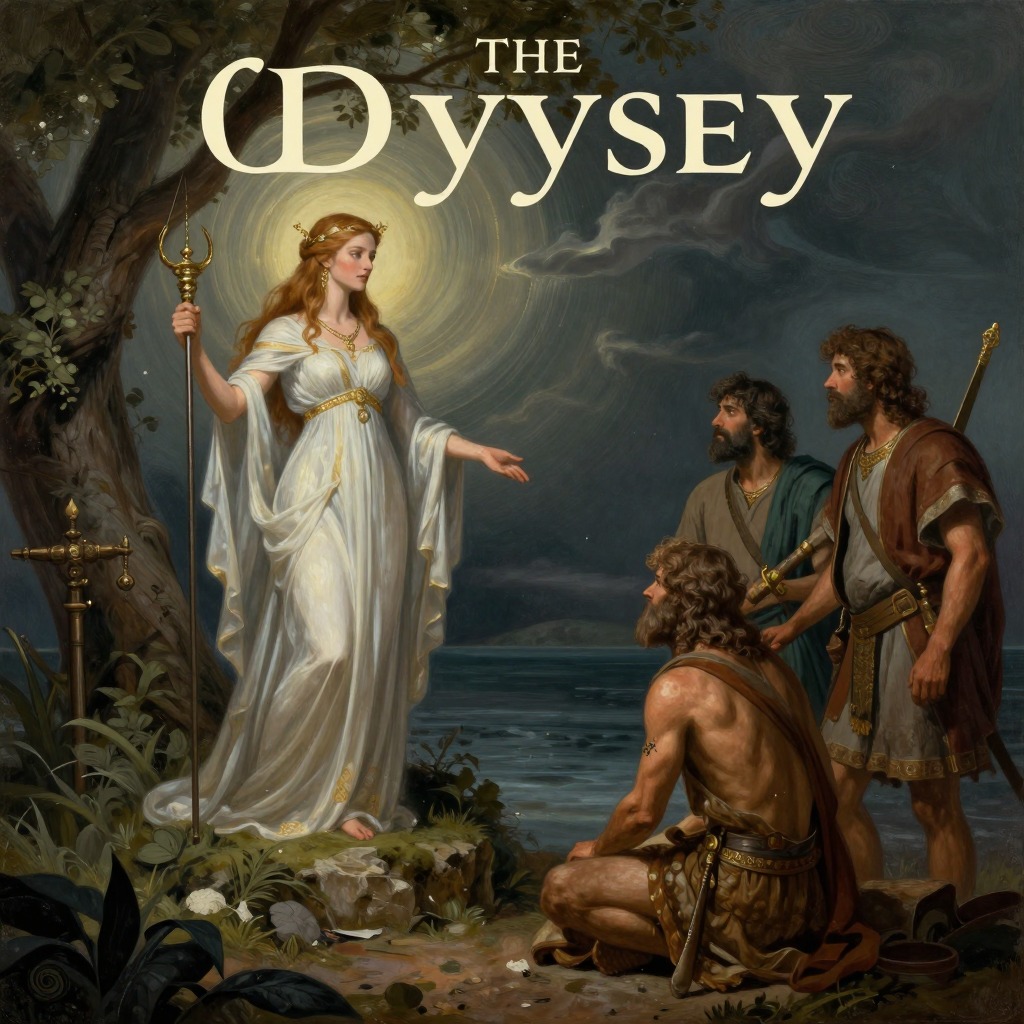
Achilles
Achilles, son of Peleus and the foremost champion of the Achaeans, is a figure whose living glory at Troy is overshadowed in the Odyssey by his haunting presence among the dead. When Odysseus journeys to the house of Hades, he meets the ghost of Achilles, who speaks with a bitterness that redefines the heroic code: he declares he would rather be a paid servant on earth than king of all the dead. This encounter, set in the meadow of asphodel, becomes a meditation on the value of life, the fragility of fame, and the unfinished bonds of family that even death cannot sever.
Identity and Background
Achilles is introduced in the Odyssey through the memories of Nestor and the tales of other characters before he appears in person. Nestor recalls him as one of the best men who fell at Troy, alongside Ajax and Patroclus. The bard Demodocus sings of the quarrel between Odysseus and Achilles at a banquet, a conflict that Agamemnon welcomed because Apollo had foretold it would begin the chain of evils that befell both Danaans and Trojans. This quarrel, though not narrated in full, establishes Achilles as a figure of immense pride and consequence, whose anger shaped the course of the war. His mother, Thetis, a sea goddess, and his father, Peleus, the aging king of the Myrmidons, are mentioned by Odysseus during their underworld conversation, grounding Achilles in a lineage of both divine and mortal sorrow.
Encounter in the Underworld
When Odysseus descends to the house of Hades, the ghost of Achilles approaches him accompanied by Patroclus, Antilochus, and Ajax. Achilles recognizes Odysseus immediately and speaks with a mixture of recognition and lament. He asks why Odysseus has dared to come among the dead, and Odysseus responds by praising Achilles' fortune: he was adored by all Argives in life and now rules as a great prince among the shades. But Achilles rejects this consolation with famous vehemence: "Say not a word in death's favor; I would rather be a paid servant in a poor man's house and be above ground than king of kings among the dead." This declaration, one of the most powerful in the epic, undercuts the traditional heroic ideal that dying gloriously in battle is the highest achievement. For Achilles, the loss of life itself renders all posthumous honor hollow.
Concern for Son and Father
Achilles' first question to Odysseus is about his son, Neoptolemus: has he gone to war and will he be a great soldier? Odysseus reassures him with a detailed account of Neoptolemus' prowess at Troy. He describes how the young man was always first to speak in council, second only to Nestor and Odysseus in judgment, and how in battle he would dash far ahead of his men, killing many enemies, including the valiant Eurypylus. Odysseus also recounts Neoptolemus' conduct inside the wooden horse: while other leaders trembled and wept, he remained calm, urging Odysseus to break out, grasping his sword and spear, breathing fury. When Troy fell, Neoptolemus received a handsome share of the prize and returned to his ship without a wound. Hearing this, the ghost of Achilles strides off across the meadow of asphodel, exulting. Achilles also asks about his father Peleus, wondering whether he still rules among the Myrmidons or is dishonored in his old age. Odysseus admits he has heard nothing of Peleus, but the question reveals Achilles' lingering attachment to the living world and his fear that his father may suffer without his protection.
Thematic Significance
Achilles' appearance in the Odyssey serves as a foil to Odysseus' own journey. Where Odysseus endures endless suffering for the chance to return home and reclaim his life, Achilles, who had the choice between a short glorious life and a long obscure one, chose glory and now regrets it. His ghostly presence reinforces the poem's central tension between kleos (fame) and nostos (homecoming), suggesting that even the greatest hero cannot find satisfaction in death. The encounter also provides a counterpoint to the suitors' fate: they die ignobly, without glory, while Achilles, who died nobly, still yearns for the simplest mortal existence. His concern for his son and father mirrors Odysseus' own anxieties about Telemachus and Laertes, creating a parallel between the two heroes that underscores the universal human desire to see one's lineage continue and one's parents honored.